
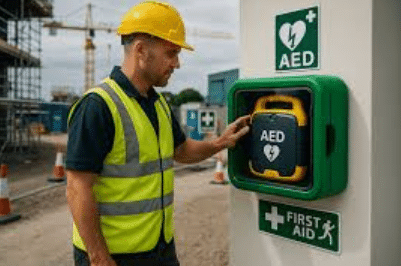
Beginning January 1, 2026, Ontario will require certain construction projects to have an Automated External Defibrillator (AED) on site. This change under the Occupational Health and Safety Act applies to projects where 20 or more workers are regularly employed and the project is expected to last at least three months.
What’s required? Construction sites must ensure:
- A Health Canada–licensed AED is installed and maintained
- Supplies including a CPR mask, disposable gloves, scissors, towels, and a razor are stored with the AED
- The AED is kept in a clean, accessible location with clear signage
- The device is inspected quarterly, with records kept on site
- At least one worker trained in CPR and AED use is present whenever work is underway
Why construction sites?
- Higher risk of cardiac events due to physically demanding work, extreme environments, and job stress.
- Sites are often temporary and away from immediate emergency medical services.
- AEDs can more than double survival rates following sudden cardiac arrest.
Read more about this new requirement iin the briefing note by Sherrard Kuzz LLP
While this regulation currently applies only to construction, AEDs are strongly recommended for all workplaces as part of a proactive health and safety program. Sudden cardiac arrest can happen anywhere, and quick access to an AED can save lives.
If you’d like more information on these requirements or guidance on implementing Health & Safety in your workplace, our team at ThryvX HR can help.
Have any questions? Reach out to our team of experts at ThryvX!


